
Wayne County Criminal History Checks
Wayne County has no single database that answers every criminal-record question. Start with the likely record type. The Wayne County Clerk of Courts supplies identified Superior and State Court cases, dockets, orders, and dispositions. It does not compile a broad felony or misdemeanor history. The Wayne County Sheriff is the first local contact for arrest, booking, jail, incident, and warrant records created by that office. City police and municipal courts keep their own records.
Gather the full name, spelling variants, approximate date, and any case, incident, booking, citation, SID, or OTN number. Date of birth may help an authorized office distinguish similar names, but public copies can omit protected identifiers.
- Choose the clerk, sheriff, jail, city agency, or state system based on the question.
- Ask for a named record, not an undefined background check.
- Match names with dates, agency, court, and identifiers.
- Follow an arrest into the correct court to find its disposition.
- Order a certified disposition or fingerprint-based self-review when identity and official status matter.
Wayne Records Have Several Custodians
The county's official government directory helps route requests, but each office controls its own files. The Clerk's Judicial Division receives and stores Superior, State, Drug, and Juvenile Court records. Juvenile files are confidential. The Sheriff holds its law-enforcement and jail records, while the county Open Records Officer can help route county-government requests. Independently elected offices may use their own process, so confirm the proper recipient before sending a large request.
Clerk of Courts
174 N. Brunswick St., Jesup, GA 31546
(912) 427-5930
Monday through Friday, 8:30 a.m. to 5 p.m.
Wayne County Sheriff
266 E. Walnut St., Jesup, GA 31546
(912) 427-5970
Call to confirm records contact and lobby hours.
Wayne County Jail
1892 S. Macon St., Jesup, GA 31545
(912) 427-5975
Use for current or recent local custody.
The county homepage shows the local government context behind these separate counters.

That directory is a routing aid, not a substitute for the originating record office.
Official Background Checks in Georgia
The Georgia Bureau of Investigation operates the Georgia Crime Information Center, the central criminal-history repository. Public felony-conviction information may be requested under Georgia law using full name, race, sex, and date of birth. A name match is not the same as a fingerprint-confirmed identity. For reviewing one's own record, a fingerprint-based inspection provides the stronger match and a path to challenge an error.
GCIC's official program page explains the repository.
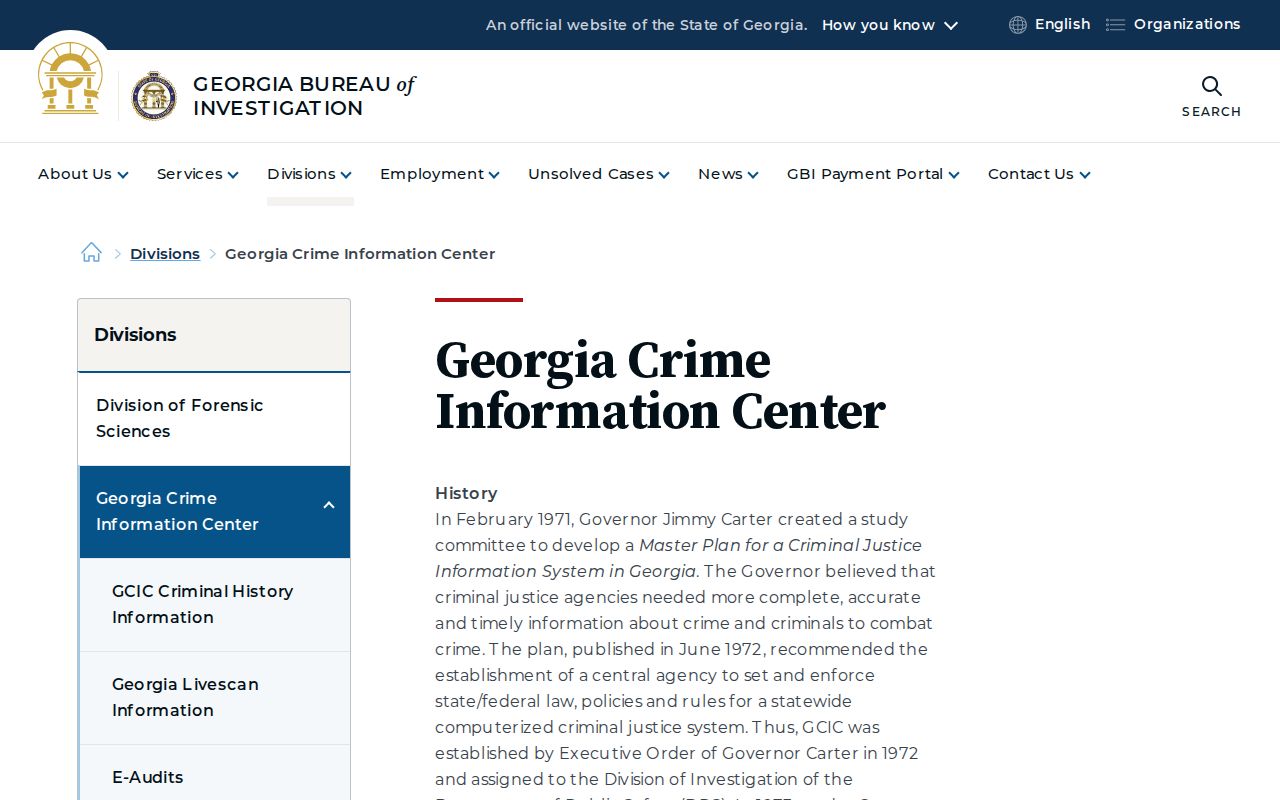
GCIC receives arrest, disposition, and custody submissions from contributing justice agencies rather than replacing their source files.
GAPS Fingerprints Now Use IDEMIA
Georgia Applicant Processing Service is the civil fingerprint transport channel. IDEMIA became the GAPS vendor in February 2025, so older Cogent or Gemalto instructions may be stale. Registration requires the correct service code. After registration, choose an available print site, bring valid photo identification, submit fingerprints, and let the authorized agency retrieve the response. No Wayne County collection site was confirmed in the research, so use the live finder rather than assuming a Jesup location.
| Service | GCIC fee | GAPS total |
|---|---|---|
| Georgia-only check | $30 | $39.99 |
| Georgia and FBI check | $42 | $51.99 |
| Qualifying volunteer, Georgia only | $28 | $37.99 |
| Qualifying volunteer, Georgia and FBI | $38 | $47.99 |
The official GAPS registration channel reflects the current vendor process.

A statutory purpose controls the service code and who receives the result.
Kinds of Criminal Records
Wayne County criminal records differ by the event and custodian. One incident can create a police narrative, an arrest report, a jail booking, a prosecutor file, and a court docket. Those files update on different schedules. A registry entry or prison profile answers another question and should not be treated as a complete rap sheet.
- Incident and arrest reports: the responding agency records the event and legal basis for custody.
- Booking records: the jail records intake, initial charges, bond, holds, and release.
- Court files: the clerk stores accusations or indictments, motions, pleas, judgments, and later orders.
- GCIC history: fingerprint-linked arrest cycles connect submitted charges, dispositions, and custody data.
- Corrections and registry entries: GDC and the Georgia registry publish limited statutory fields for distinct purposes.
No Online Wayne Jail Roster
No verified public Wayne County jail roster or sheriff app was found. For a recent booking, call the jail at (912) 427-5975, then call the arresting agency for its report. A written open-records request can seek a nonexempt booking sheet, jail log, or arrest report. Name the date range and record sought. Georgia VINELink can supplement custody notification, while the Georgia Department of Corrections search becomes relevant after transfer to state custody.
The GDC facility entry for Wayne County Jail confirms the local facility context.
Do not infer that no record exists merely because there is no public roster.
Wayne County Records: What They Contain
A record should be read as a timeline. Identification fields connect the subject to an arrest cycle. Arrest fields show what the agency alleged at intake. Prosecutors may change, reduce, or decline charges, and the filed court charge can differ from the booking label. The disposition gives the legal outcome. A blank disposition may be a reporting gap, not proof of guilt.
| Name and identifiers | Name, date of birth, physical descriptors, SID, OTN, or agency number where law permits. |
|---|---|
| Arrest and booking | Agency, date, initial charges, booking number, bond, hold, and release data. |
| Filed charges | Accusation or indictment counts, statutes, and prosecutor action. |
| Disposition | Dismissal, nolle prosequi, plea, acquittal, conviction, or other final action. |
| Sentence | Custody, probation, fines, conditions, and later modifications. |
| Supervision | GDC custody or Department of Community Supervision status when public. |
Correct a Missing Wayne Disposition
Start with the contributor. The arresting agency corrects arrest data; the court or prosecutor confirms a disposition. GCIC cannot change a missing or inaccurate item without documentation or authorization from that source. Obtain a certified Wayne County disposition when possible and include the subject's name, date of birth, race, sex, arrest date, and SID, OTN, or arrest number if known.
The GBI criminal-history FAQ explains inspection, correction, and dissemination rules.
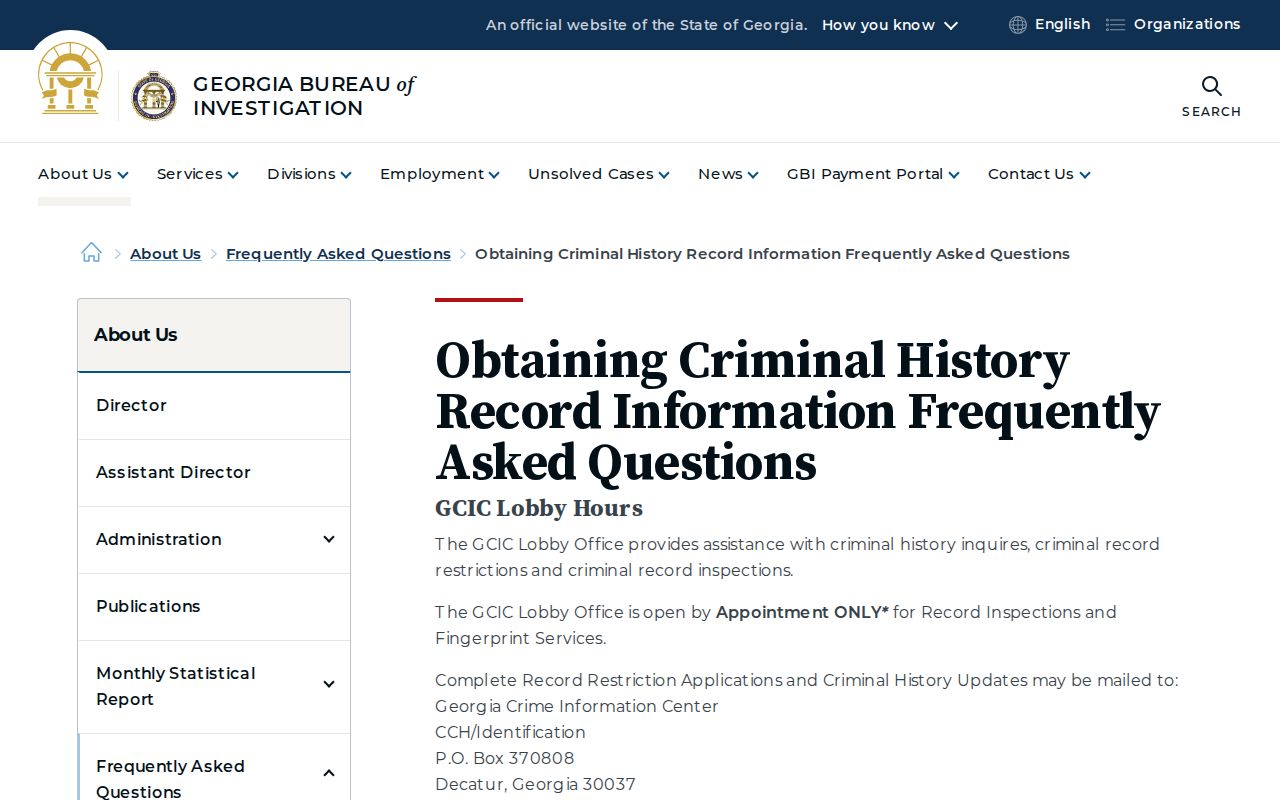
Source documents let GCIC connect the correction to the right arrest cycle.
Georgia Public Access Laws
The Georgia Open Records Act applies to existing agency records. It does not require an office to create a report or perform legal analysis. Agencies generally must produce responsive material within three business days or state when and how it will be available. They may redact protected data and charge lawful costs. Court access also follows judicial and clerk rules, so a request to the clerk is not always identical to an executive-agency request.
Key authorities:
O.C.G.A. § 50-18-70 states Georgia's policy favoring open records.
O.C.G.A. § 50-18-71 governs requests, timing, formats, and lawful charges.
O.C.G.A. § 50-18-72 identifies exempt and protected material.
O.C.G.A. § 35-3-34 controls GCIC dissemination, including public felony-conviction access.
Use Open Records When Portals Fail
A precise request works better than asking for all background information about a person. Identify an incident report, arrest report, booking sheet, warrant confirmation, 911 or CAD record, or body-camera recording. Give the incident number, date and time range, location, agency, and preferred format. Ask for the nonexempt segregable portion and a statutory explanation for any withholding.
The Wayne County Clerk page illustrates why routing matters.
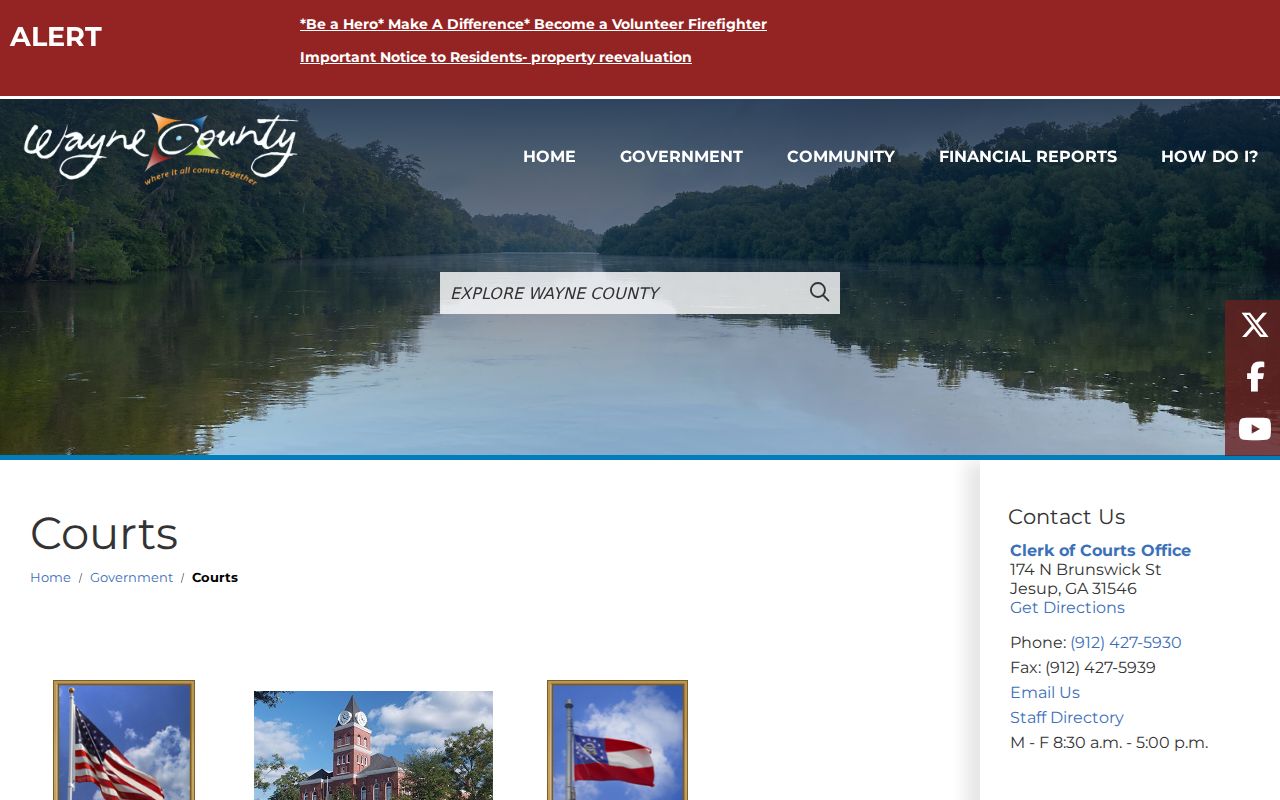
The clerk's counter is for filed cases, while law-enforcement media stays with the agency that made it.
Restricted, Sealed and Expunged Records
Georgia calls its main relief process record restriction. Restriction is not destruction. Eligible GCIC arrest information becomes unavailable for most non-criminal-justice purposes but can remain available to justice agencies and other authorized users. A local court file may require a separate sealing process. Outcomes such as no prosecution, dismissal, nolle prosequi, or acquittal may qualify, subject to statutory limits.
For an arrest before July 1, 2013, the applicant generally begins the GBI restriction form with the arresting agency, which routes it to the prosecutor. For later arrests, GBI directs the person to the prosecutor responsible for the disposition. The current GCIC processing fee is $25 where it applies. A booking entry alone cannot establish eligibility.
The Wayne Courthouse Record Trail
Jesup's official courthouse history places the building in 1902 and 1903. Its four clock faces and open belfry still mark Courthouse Square. An early-1990s restoration returned the interior to its original plans, and the second-floor Superior Court room retains original woodwork. The local setting matters because the county's modern record trail still turns on the difference between the historic court function and the Clerk's Annex counter behind it.
The City of Jesup courthouse history documents that landmark.
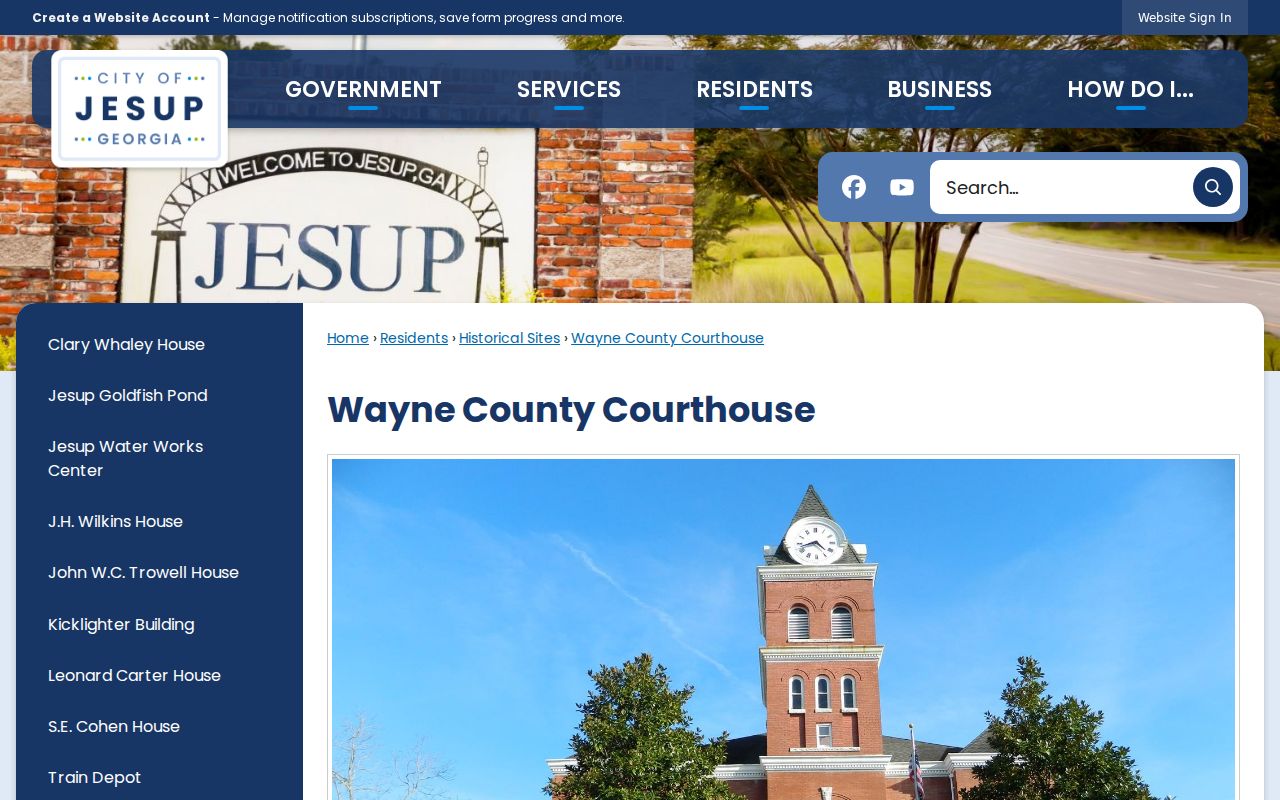
The surviving courtroom is local history, while current copy requests go to the Clerk's published office.
Wayne Supervision Is a Separate Record
The Georgia Department of Community Supervision manages adult felony probation and parole supervision in the community. It is not the Wayne County Clerk and does not replace a court disposition. GDC publishes state-prison information, while federal custody at the Jesup correctional complex belongs to the Federal Bureau of Prisons. Mixing those three systems can attach the wrong status to a local case.
The Department of Community Supervision is the official state source.
Use the sentencing order as the bridge between a court result and later supervision.
City-by-City Criminal Records in Wayne County
Jesup, Screven, and Odum create city-level police and municipal-court records. A city report does not include every Sheriff, Georgia State Patrol, court, or GCIC entry. Start with the responding agency, then follow any booking to Wayne County Jail and any filed charge to the correct city or county court.
Jesup Record Check
County seat with city police, Municipal Court, and the main county record counters.
Screven Record Check
City Hall routes police and court inquiries when no public portal is available.
Odum Record Check
Confirm city limits and the responding agency before requesting a report.
Wayne Arrest Charges Can Change
An arrest charge records the officer's basis for custody at that stage. It is not a verdict. After booking, the prosecutor reviews the facts and chooses whether and how to file the case. An accusation or indictment may use different counts or statutes. Later motions, pleas, trials, and sentencing orders can change the record again. That is why a Wayne County booking result should be paired with the Clerk's docket and final disposition.
- Nolle prosequi
- The prosecutor formally declines to continue a filed charge.
- Dead docket
- A case is placed in an inactive status without the same meaning as an acquittal.
- Disposition
- The recorded outcome of a charge, such as dismissal, plea, acquittal, or conviction.
- First Offender
- A Georgia statutory form of treatment whose final record effect depends on successful discharge and the governing law.
When a Wayne record shows no outcome, request the certified court disposition. Then ask the contributing court or prosecutor to send any needed update to GCIC.
Wayne E-911 Routes, Not Owns
Wayne E-911 dispatches calls for several agencies, but dispatching a call does not make E-911 the keeper of every later report. The responding Sheriff's deputy, Jesup officer, Screven officer, Odum officer, Georgia State Patrol trooper, or other unit creates its own law-enforcement record. E-911 may hold call audio or computer-aided dispatch data. The responding agency keeps the incident narrative, and the jail creates a booking only if custody follows.
For a request with an uncertain agency, provide the date, time, exact location, and incident number to E-911 or the county routing contact. Use the response to identify the custodian. Then request the police narrative from that agency, any booking material from Wayne County Jail, and any filed charge from the proper municipal, State, or Superior Court. This sequence avoids sending one broad demand to an office that owns only one part of the event.